

persolog® model naprezanja
Stress is individual: What puts one person under pressure may hardly affect another. The persolog® Stress Model therefore looks at what causes stress, how people react to it and how they deal with it. It also considers personal patterns of thinking and behavior that play an important role under stress. Knowing and understanding your own stress behavior is an important foundation for dealing with stress more consciously.
What is stress competence?
Stress competence describes the ability to understand your own stress experience and deal appropriately with stressful situations. This starts with recognizing which situations cause stress, how you assess them and how you typically react.
Stress competence does not mean avoiding stress completely. Stress is part of life and can motivate us and drive performance. What matters is knowing your own reactions, using the resources available to you and finding ways to deal with stress that fit the situation.
What is the persolog® Stress Model?
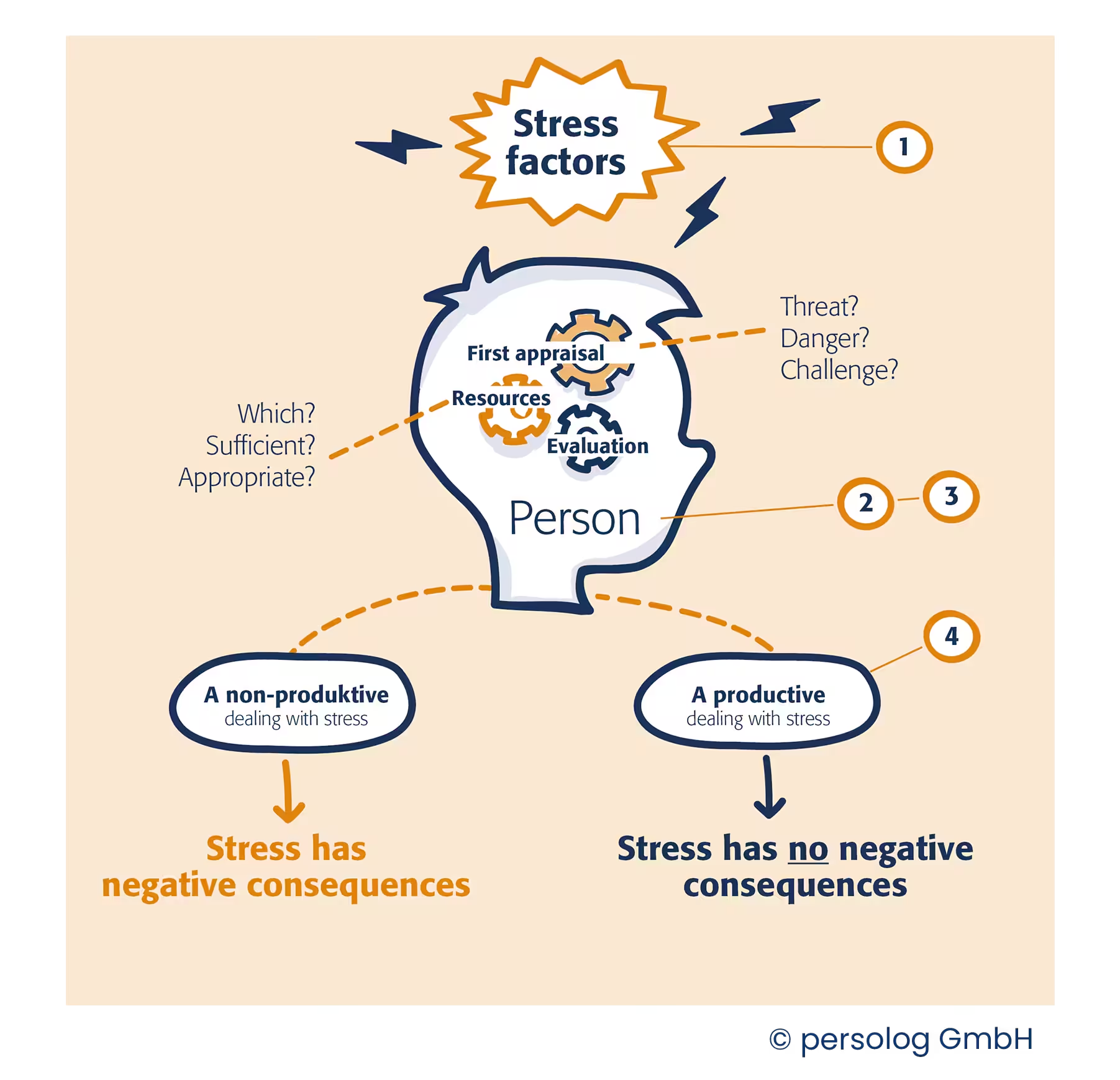
The persolog® Stress Model takes a holistic and individual approach to stress. Not everyone experiences the same situations as stressful or reacts to pressure in the same way.
Stress does not arise from a specific trigger alone. It also depends on how a situation is assessed, which resources are available and which options a person sees for coping with it. These components influence how stress is experienced and how a person reacts to it.
In addition to personal stress factors, the model therefore considers typical reactions and stress patterns. It distinguishes between 11 stress patterns that help people better understand their personal patterns of thinking and behavior under stress. The aim is not to put people into fixed categories but to take a closer look at their own behavior in stressful situations.
The model also considers different reactions to stress, including confrontation, avoidance, compliance and withdrawal. Which stress patterns and reactions occur is individual and can vary depending on the person and the situation.
4 ways to greater stress competence
Stress competence can be developed in different areas. Four ways are considered: developing your personality, strengthening relationships, clarifying demands and using your scope for action. Each way focuses on a different area and provides opportunities to reflect on how you deal with stress and develop your stress competence further.
1. Developing your Personality
The first approach focuses on your own personality. The key question is how we can put ourselves under less pressure and allow more calmness into our lives.
2. Strengthening relationships
The second approach focuses on our relationships. It is about building stronger and healthier relationships and strengthening an important area of personal stress competence.
3. Clarifying demands
The third approach focuses on the demands we face in everyday life. It is about looking at demands realistically and considering whether and how they are manageable for us.
4. Using your scope for action
The fourth approach looks at organizational structures and workflows. It is about consciously using the scope for action that already exists and creating additional room for action where possible.
Where is the persolog® Stress Model used?
The persolog® Stress Model can be used in different contexts where people want to better understand their stress behavior and develop their stress competence. It is suitable for personal development as well as professional use in training, coaching and companies.
Personal development
The model helps people take a closer look at their own stress factors and personal behavior under stress. Knowing your own patterns can help you reflect more consciously on how you deal with stressful situations.
Training and coaching
Trainers and coaches can use the persolog® Stress Model to support people in reflecting on their stress factors and stress patterns and better understanding their own stress behavior.
Tvrtke
The model can also be used in companies to support employees in developing their stress competence. It considers both the individual way of dealing with stress and factors such as demands, working conditions and available scope for action.
How is the persolog® Stress Model applied in practice?
The persolog® Stress Profile helps people take a closer look at their personal stress experience. It shows which stress factors play a role and how a person typically reacts to stress.
The personal reaction pattern and individual stress patterns are also considered. This can help reveal connections between stress triggers and personal behavior under stress.
The next step focuses on available resources and ways of dealing with stressful situations. Both short-term and long-term stress management strategies can be considered.
Working professionally with the persolog® Stress Model
If you want to use the persolog® Stress Model professionally in training, coaching or personnel development, you can become certified in the model. During the certification, you learn how to work with the persolog® Stress Profile and use the results professionally in training and coaching.
Who is the certification suitable for?
The certification is designed for people who want to professionally support others in dealing with stress. This includes trainers, coaches, consultants, leaders and professionals working in HR and personnel development.
Što kažu naši kupci
Profil stresa persolog može se koristiti za osmišljavanje i provođenje dobrih seminara o stresu. Pomaže da se stres i obrasci stresa učine vidljivima i da se razviju odgovarajuće strategije. Sudionici uče razumjeti uzroke i posljedice te razviti vlastita aktivirana rješenja. To je koristan i vrijedan alat za suočavanje sa stresom, kao i za učinkovito samokontrolu.
Rainer Burghardt
Razvojnik ljudskih resursa, Sparkasse Altöttingen-Mühldorf
For me, the digital stress certification was exactly the right trainer training in these crazy Corona times. I was able to time the learning units the way it worked for me. The trainer guides and presentations help to prepare a high quality seminar on the topic of own stress behavior, stress management within a very short time. After filling out my own stress profile, the most important thing was to "recognize myself" in my own behavior, in order to then be shown suitable short- and long-term stress management strategies. A "must have" in this fast-moving time of change, for all who want to deal with deep-seated beliefs and want more serenity in your life.
Bettina Schell
Generalni direktor www.perso-train.de
Frequently asked questions about the persolog® Stress Model
Is stress always negative?
Stress is not always negative. It can activate us, increase attention and help us deal with challenges. Stress can become problematic when pressure continues over a long period of time or when people feel that their available coping options are not sufficient.
Why do people react differently to stress?
People react differently to stress because it is not only the situation itself that matters but also how they personally assess it and which coping options they believe are available. The same situation can therefore feel highly stressful to one person and much less stressful to another. Personal patterns of thinking and behavior also play a role in how people deal with stress.
What is the difference between stress factors and stress patterns?
Stress factors describe influences and situations that can trigger stress while stress patterns describe typical patterns of thinking and behavior under stress. The persolog® Stress Model considers both levels in order to reflect not only on possible triggers but also on how a person deals with stress.
What role do personal thought patterns play in stress?
Personal thought patterns can influence how a situation is perceived and assessed. Familiar patterns of thinking and behavior can become particularly noticeable under stress. Recognizing and reflecting on these patterns can therefore be an important part of developing stress competence.
Can working conditions cause stress?
Stress can be influenced by both personal and work-related factors. High or unclear demands, workflows and limited scope for action can all play a role. Stress competence should therefore not be seen solely as the responsibility of the individual but should also take into account the conditions under which people work.