
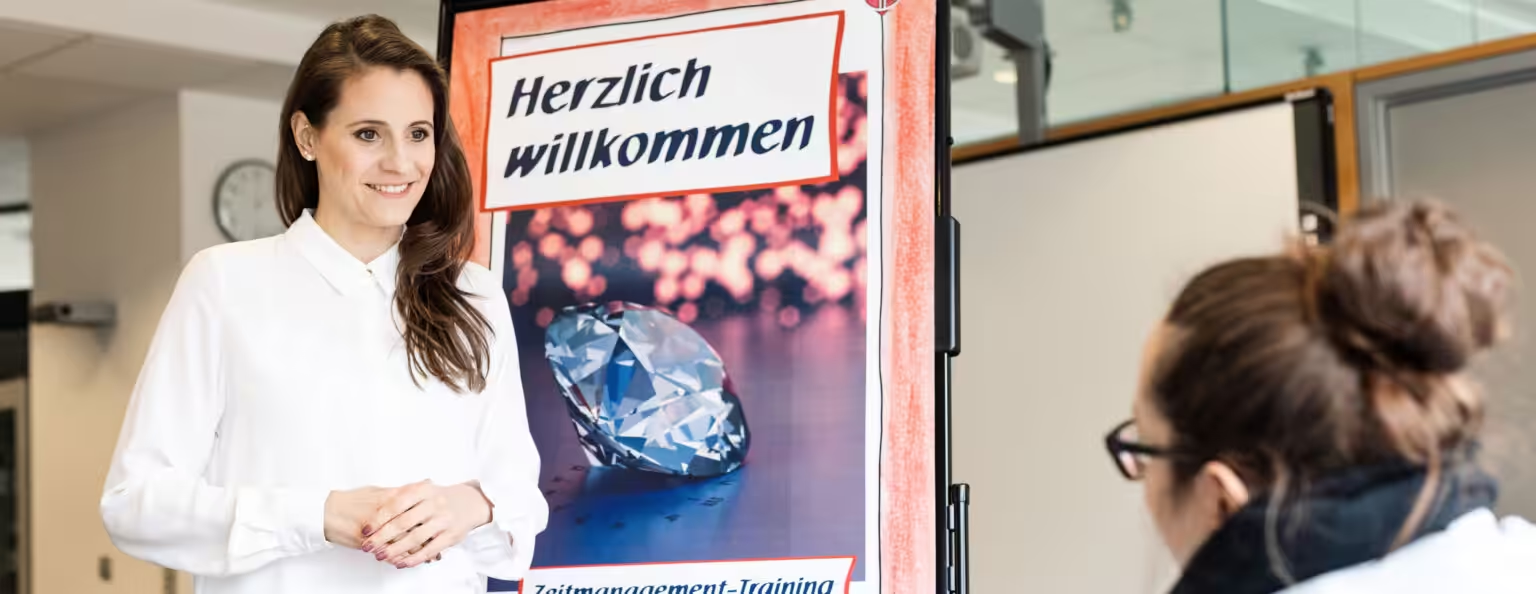
persolog® Time Management Model
Time is a valuable resource. What matters is how we use the time available to us. The persolog® Time Management Model looks at how people evaluate their time, plan, put their plans into action and reflect on how they use their time. This helps identify areas where time competence is already well developed and where there is potential for further development.
What is time competence?
Time competence describes the ability to manage your own time consciously and use it for the things that matter to you. Time itself cannot be managed: it cannot be saved or recovered. Time management is therefore primarily about managing yourself and your own behavior within the time available to you.
This includes being clear about your goals and priorities, planning the time available to you consciously and regularly reflecting on how you use your time. Time competence can be developed and trained.
What is the persolog® Time Management Model?
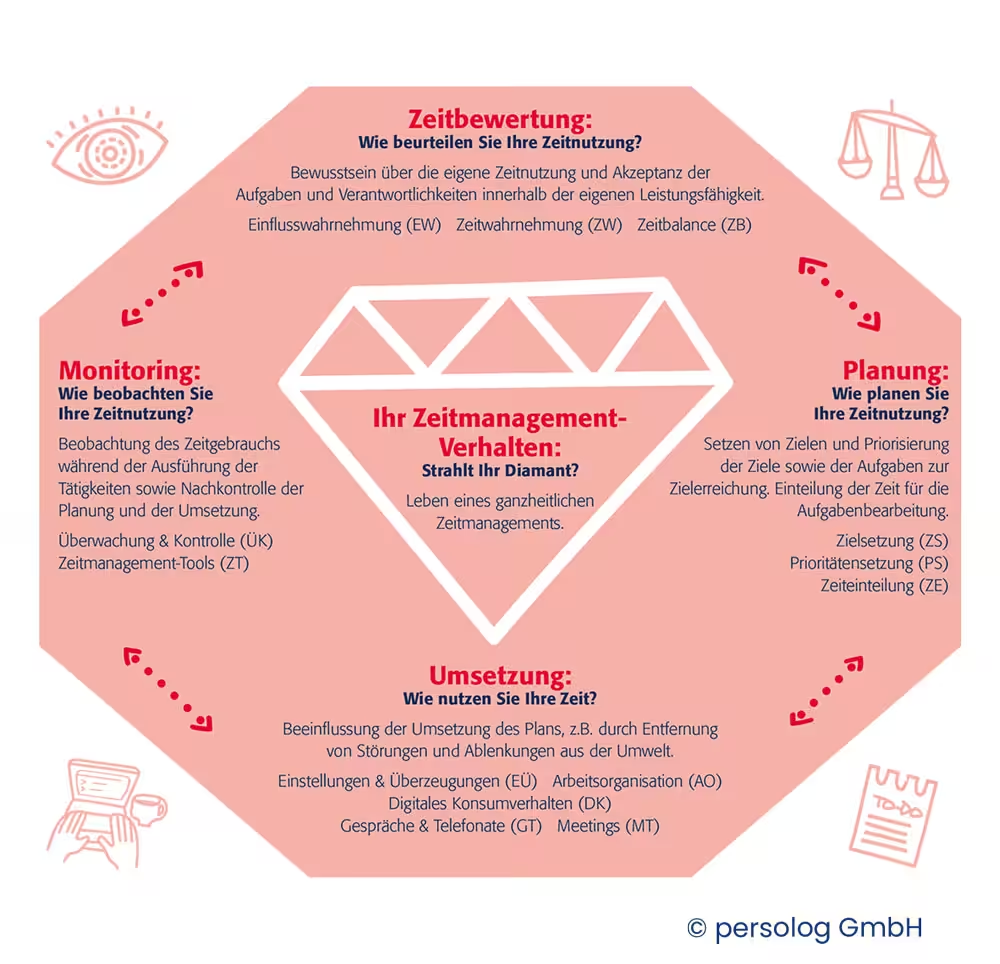
The persolog® Time Management Model views time management as behavior that enables people to focus on what matters most. The focus is not on finding ways to create more time but on how people use the time available to them.
The model considers four dimensions of time management behavior: Time Evaluation, Planning, Implementation and Monitoring. They provide the framework for taking a differentiated look at how people manage their time.
The 4 dimensions of time management behavior
The four dimensions comprise a total of 13 competence areas that cover different aspects of personal time management behavior.

1. Time Evaluation
The Time Evaluation dimension focuses on how people perceive their time and how much influence they believe they have over the way they use it. It also considers how available time is spent and how work, relaxation and recharging are balanced.
The three competence areas within Time Evaluation are Perception of Influence, Perception of Time and Time Balance.

2. Planning
The Planning dimension focuses on goals, priorities and how available time is allocated. When people know their goals, they can evaluate tasks according to how much they contribute to achieving those goals and plan their time accordingly.
The three competence areas within Planning are Goal Setting, Prioritization and Time Allocation.

3. Implementation
The Implementation dimension considers what supports people in putting their plans into action and what may prevent them from doing so. This includes internal and external distractions as well as work organization, the use of digital media, conversations and phone calls and meetings.
The five competence areas within Implementation are Attitudes and Beliefs, Work Organization, Digital Consumption Behavior, Conversations and Phone Calls and Meetings.

4. Monitoring
The Monitoring dimension focuses on regularly reviewing how time is being used. This includes reflecting on whether plans have been implemented, whether time was allocated realistically and which tools can support personal time management.
The two competence areas within Monitoring are Monitoring & Control and Time Management Tools.
Where is the persolog® Time Management Model used?
The persolog® Time Management Model can be used wherever people want to reflect on how they use their time and develop their time competence. The model is suitable for personal development as well as for use in training, coaching, personnel development and companies.
Personal development
The model supports people in becoming more aware of their own time management behavior and reflecting on how they use their time. This can help them develop their personal time competence.
Training and coaching
Trainers and coaches can use the persolog® Time Management Model to support people with different challenges related to how they use their time. This can include looking at goals, priorities, habits and the implementation of plans.
Companies and teams
In companies, the model can be used in personnel development and employee leadership to develop the time competence of employees and leaders. Time competence can also be addressed in the context of teams.
How is the persolog® Time Management Model applied in practice?
The persolog® Time Management Profile provides a differentiated view of how a person manages their time. A questionnaire is completed and evaluated to assess different areas of individual time management behavior.
The results can then be used to reflect on how a person uses their time and take a closer look at personal strengths and areas for development.
Working professionally with the persolog® Time Management Model
If you want to use the persolog® Time Management Model professionally in training, coaching or personnel development, you can become certified in the model. During the certification, you learn about the Time Management Model and the Time Management Profile and how to use them in training and coaching.
Who is the certification suitable for?
The certification is designed for people who want to teach time management and time competence professionally and support others in developing the way they use their time. This includes trainers, coaches, consultants, leaders and professionals working in HR and personnel development.
What our customers say
The Time Management Profile enables a differentiated discussion of one's own approach to time, thus ensuring acceptance and forming the basis for sustainable behavioral change.
Thomas Hartmann, Trainer/Coach, Kienbaum Consultants International
The materials were very detailed and practical. I was particularly impressed by the wide range of topics on the subject of time management!
Stefanie Zange, Sales Officer bAV, SV-Sparkassen Versicherung Holding AG
Frequently asked questions about the persolog® Time Management Model
Can time management be learned?
Time management and time competence can be developed and trained. It is not just about learning individual methods or tools. Time perception, goal setting, prioritization, work organization and regularly reflecting on your own behavior also play a role.
Why don't time management methods work equally well for everyone?
The way people manage their time is individual and does not depend solely on the method they use. Personal goals, priorities, attitudes, working styles and circumstances can influence which approaches are helpful in everyday life. This is why the persolog® Time Management Model considers different dimensions and competence areas rather than focusing exclusively on individual time management methods.
How can time management be improved in teams?
Time management in teams is not only about individual work organization but also about how shared time is used. Clear goals and priorities as well as the way meetings and workflows are organized can play a role. The persolog® Time Management Model can be used to address time competence in an organizational context.
How does digital media affect time management?
Digital media can influence how people use their time and can both support and distract them. The persolog® Time Management Model therefore considers digital consumption behavior as one of the competence areas within the Implementation dimension. This makes it possible to reflect consciously on how digital media are used.
What role does time perception play in time management?
The way people perceive time is one aspect of their personal time management behavior. In the persolog® Time Management Model, Time Perception is considered within the Time Evaluation dimension. Along with Perception of Influence and Time Balance, it is one of the three competence areas within this dimension.